ACV vs. Replacement Cost in Texas: What Your Roof Coverage Actually Means
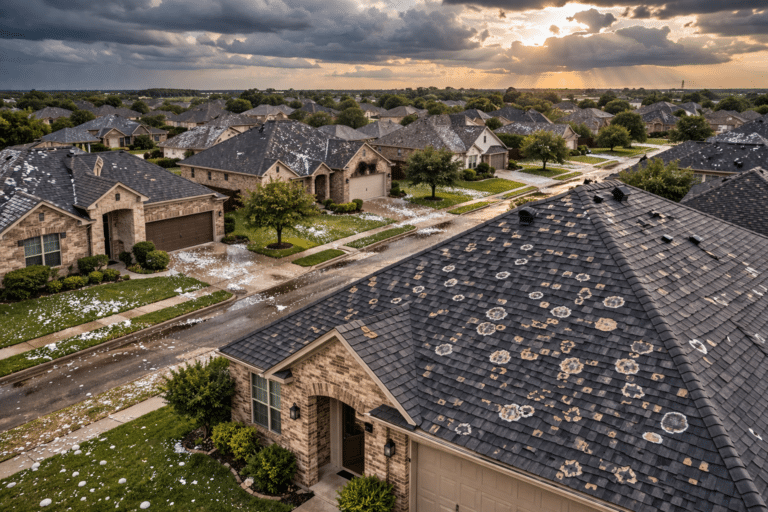
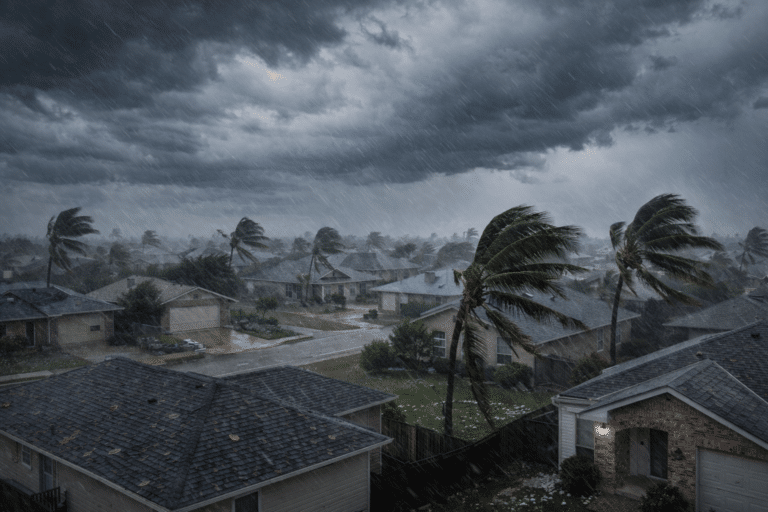
Texas had more than 600 significant hail events in a recent twelve-month period. When one of those storms hits your neighborhood, a roofing contractor often shows up with a clipboard. The first question they ask is not about shingles. It is about your insurance coverage.
Specifically: do you have ACV or RCV?
Most Texas homeowners do not know the answer. However, not knowing the answer is not a small thing. The difference between ACV and RCV coverage can mean thousands of dollars. For example, on an older roof, the gap can be the difference between a full repair and an unexpected out-of-pocket bill.
This is not complicated once you see it clearly. So here is exactly what these two terms mean, how they apply to Texas hail claims, and what to check on your declarations page before the next storm season starts.
What Is Actual Cash Value (ACV)?
Actual cash value is what your property is worth at the moment of the loss. It accounts for age and wear. The formula is simple:
ACV = Replacement Cost – Depreciation
Depreciation is not a punishment. Instead, it reflects that a 12-year-old roof is not worth as much as a brand-new one. Materials wear down. Granules wash off. UV exposure breaks down asphalt over time.
An insurer covering ACV pays you for the value of what you had. Therefore, you do not receive the cost of replacing it with something new.
Here is a concrete example. Suppose a full roof replacement costs $18,000 in your area. Your roof is 12 years old, so the insurer calculates 50% depreciation. Your hail claim payout before the deductible would be $9,000 — not $18,000.
Next, consider the deductible. If your hail deductible is 2% on a $350,000 home, that is $7,000 off the top. Your net check: $2,000. As a result, you owe $16,000 out of pocket to complete the job.
That is the real risk of ACV coverage on an aging roof.
What Is Replacement Cost Value (RCV)?
Replacement cost value coverage pays the full cost to repair or replace damaged items with new materials. Specifically, it uses materials of like kind and quality. It does not subtract depreciation.
Consider the same scenario: $18,000 roof, hail claim, 2% deductible of $7,000. Under RCV coverage, your net check is $11,000. That covers the remaining cost of the job. No gap. No out-of-pocket surprise.
RCV coverage costs more in premium. However, for most Texas homeowners with roofs under 10 years old, it is worth it. For homeowners with older roofs, insurers may refuse to offer RCV. In high-hail markets, many insurers now offer ACV only. This is increasingly common across North Texas and the DFW corridor.
How Depreciation Is Calculated on a Texas Roof
Insurers use a depreciation schedule that accounts for several factors:
- Roof age — the older the roof, the higher the depreciation percentage
- Roof material — asphalt shingles depreciate faster than metal; slate lasts longer
- Condition at time of loss — a roof already in poor condition depreciates more
- Expected useful life — a standard asphalt shingle roof is typically rated for 20-25 years
For example, a 15-year-old shingle roof on a 20-year lifespan might carry 75% depreciation. An 8-year-old roof might carry 35-40%. These numbers vary by insurer and adjuster. There is no single state-mandated depreciation schedule in Texas.
The Texas Department of Insurance notes that disputes over depreciation are among the most common sources of homeowners insurance complaints. If you believe the adjuster’s calculation is wrong, you have the right to contest it.
The Two-Payment System: How RCV Policies Actually Work
If you have an RCV policy, the insurer does not always write one check up front. Instead, most RCV claims are paid in two stages.
Payment 1 — ACV check: The insurer first pays the actual cash value of the loss. This is the depreciated amount.
Payment 2 — Recoverable depreciation: Once you complete the repairs and submit proof of completion, the insurer releases the withheld depreciation. This second payment is called “recoverable depreciation.”
This two-payment structure matters for several reasons. First, you may need to front the repair costs while waiting for the second check. Second, if you never complete the repairs, many policies allow the insurer to keep the depreciation. Finally, the deadline for submitting completion documents varies by policy — typically 180 days to one year from the date of loss.
Read your policy for the specific deadline. If you miss it, you may forfeit the recoverable depreciation entirely.
What to Look for on Your Declarations Page
Your declarations page is usually the first one or two pages of your policy. It tells you most of what you need to know. Look for these fields:
Coverage A — Dwelling: This is your home’s insured value. Your deductible and claim payments are calculated from this number.
Loss Settlement — Roof: Some policies now have a separate loss settlement provision for the roof. You may have RCV on the dwelling but ACV on the roof. This is increasingly common in Texas. So do not assume your roof is covered on the same basis as the rest of your home.
Deductible: Find the wind/hail deductible specifically. It is often listed separately from the all-other-peril deductible.
Endorsements: Check for any endorsements that modify roof coverage. “Actual Cash Value Roof” or “Cosmetic Damage Exclusion” endorsements can significantly limit what you collect on a hail claim.
If you cannot find this information on your declarations page, call your agent and ask directly: “Is my roof covered on an RCV or ACV basis?”
When ACV Leaves You With Nothing
This is the scenario nobody explains clearly enough before storm season. Here is when ACV coverage can result in a zero payout:
- Your 18-year-old roof is severely depreciated — say, 85%
- The adjuster values the damage at $12,000
- ACV payout: $12,000 x 15% = $1,800
- Your 2% hail deductible on a $300,000 home: $6,000
The ACV payout ($1,800) does not clear your deductible ($6,000). As a result, insurance pays nothing. You owe the full repair cost out of pocket.
This is not a scam. It is simply how the math works when you have old-roof ACV coverage and a percentage-based hail deductible. Therefore, understanding it before the storm is the only way to plan for it. For a full overview of the claims process in Texas, the Texas Department of Insurance publishes a plain-English guide to homeowners claims.
Frequently Asked Questions
What is the difference between ACV and RCV in Texas homeowners insurance?
ACV (actual cash value) pays the depreciated value of your damaged property. In other words, it pays what the property was worth at the time of loss — not what it costs to replace it new. RCV (replacement cost value) pays the full cost to repair or replace with comparable new materials, without subtracting for age or wear. For a roof, the gap between these two numbers can be thousands of dollars on a typical Texas hail claim.
Does Texas law require insurers to offer RCV coverage?
No. Texas law does not require insurers to offer RCV coverage on roofs or any other component. Insurers in Texas can and do offer ACV-only roof policies, particularly on homes with older roofs or in high-hail-risk zip codes. The Texas Department of Insurance regulates policy forms, but coverage availability is determined by the insurer.
What is recoverable depreciation and how do I claim it?
Recoverable depreciation is the withheld portion of your RCV claim — specifically, the difference between the ACV payment and the full replacement cost. To recover it, complete the repairs and collect itemized invoices from your contractor. Then submit proof of completion to your insurer within the deadline in your policy, typically 180 days to one year from the date of loss. The insurer then releases the withheld amount.
Can my insurer depreciate labor costs, not just materials?
This has been a contested issue in Texas. Some insurers depreciate both materials and labor; others depreciate materials only. Texas courts have addressed this in several decisions. The outcome often depends on specific policy language. If your insurer is depreciating labor and you believe that is inconsistent with your policy, review your policy carefully. Consider consulting an attorney if the amount at issue is significant.
How do I know if my roof has ACV or RCV coverage?
Check your declarations page under “Loss Settlement” or look for a separate roof endorsement. The policy will state whether the roof is covered on a “replacement cost” or “actual cash value” basis. If you cannot locate this in your documents, call your agent and ask directly. This is a straightforward question any agent can answer in minutes. Do not wait until after a storm to find out.
What should I do if I think my adjuster undervalued my hail claim?
You have options. First, request a re-inspection and ask the adjuster to walk through the depreciation calculation with you. You can also hire a public adjuster or a licensed roofing contractor for an independent estimate. If the dispute is significant, your policy likely includes an appraisal clause — a formal process where each party selects an appraiser and an umpire resolves disagreements. In addition, the Texas Department of Insurance accepts complaints about claims handling at tdi.texas.gov.
Questions about your coverage?
David Offutt is a licensed insurance agent in Fort Worth and the author of Understanding Insurance in Simple English. If you want to review your coverage before storm season — or understand what your policy actually says — reach out.
Contact David at 817insurance.com
This post is for informational purposes only and does not constitute legal or financial advice. Policy terms vary. Always review your specific policy documents or consult a licensed agent.